Mt. Fuji Sunrise Crowds in 2026: Why Mountain-Hut Sunrise Can Be Smarter
A calmer way to plan the moment everyone wants
For many first-time visitors, “sunrise from the summit” is the dream phrase attached to Mt. Fuji. It is also the phrase that can make the climb colder, slower, and more crowded than expected.
The official crowd guidance for 2026 encourages travelers to avoid congested days and times. It also explains that the area above the 8th Station can become especially crowded between 3 AM and 5 AM because so many climbers aim for sunrise.
1. The summit is not the only sunrise
Smarter timing
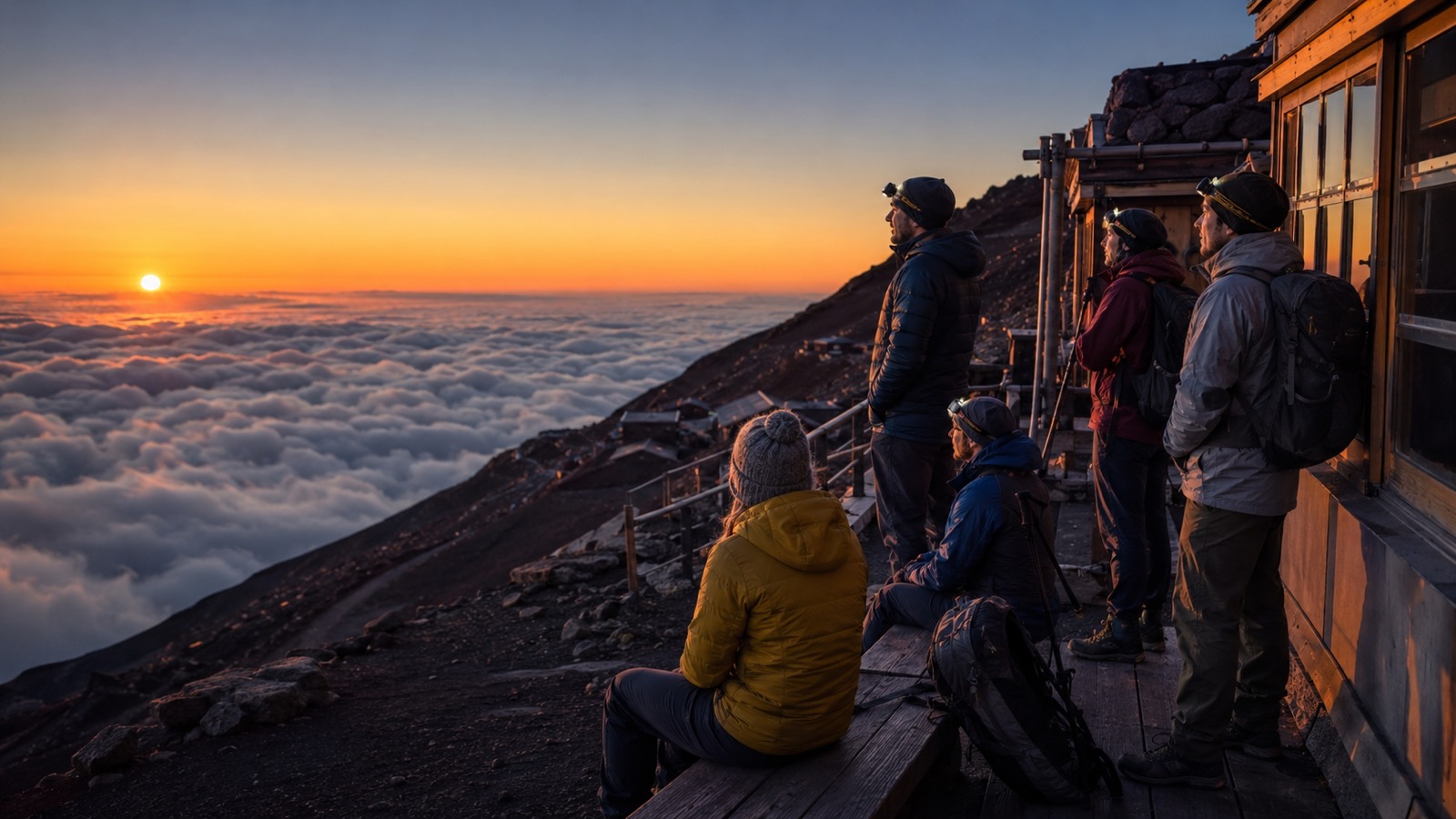
Official guidance suggests that travelers can watch sunrise from around a mountain hut and then continue toward the summit after the busiest window has eased. For many visitors, this is the more comfortable version of the Mt. Fuji sunrise experience.
You still get the drama: headlamps, thin air, cloud layers, and morning light. What you reduce is the pressure to move in a slow night queue while cold and tired.
Why it works
- Less pressure to reach the summit before dawn.
- More stable footing once daylight improves.
- A better chance to notice your own fatigue before pushing higher.
Best traveler move: choose the safest sunrise, not the most famous one.
2. Crowds change the climb
3 AM to 5 AMThe official page says the upper Yoshida route can experience long stretches of congestion, and that nighttime movement from the 8th Station to the summit can take about twice as long as daytime movement.
This matters for clothing, water, pacing, and patience. Waiting in line at altitude before dawn is much colder than walking continuously.
Plan for the queue
- Bring enough warm layers to stand still near the top.
- Avoid building a schedule that requires perfect speed.
- Use the official congestion forecast before choosing your climb date.
Small luxury: comfort on Mt. Fuji often comes from timing, not from gear alone.
3. A two-day plan is usually cleaner
Hut strategyThe safest sunrise plan usually starts before the mountain, not on it. Book a nearby stay, climb at a steady pace, sleep at a hut, watch sunrise calmly, and then decide how the summit fits the morning.
For foreign travelers, this is also easier to explain to a group. Everyone knows where they sleep, when they wake, and what the fallback looks like if weather changes.
Simple two-day flow
- Day one: arrive near Kawaguchiko or Fujiyoshida and keep the evening quiet.
- Climb day: start early enough, stay at a mountain hut, and watch the forecast.
- Morning: sunrise near the hut, summit if conditions and energy are right.
Best result: a memorable sunrise without turning the trip into a forced march.
- Sunrise crowds
- Mountain hut
- Yoshida Trail
- Safer climb