
Yoshida Trail 2026 Rules: Gate Hours, Daily Limits, and Better Planning
The Mt. Fuji route most Kawaguchiko visitors need to understand
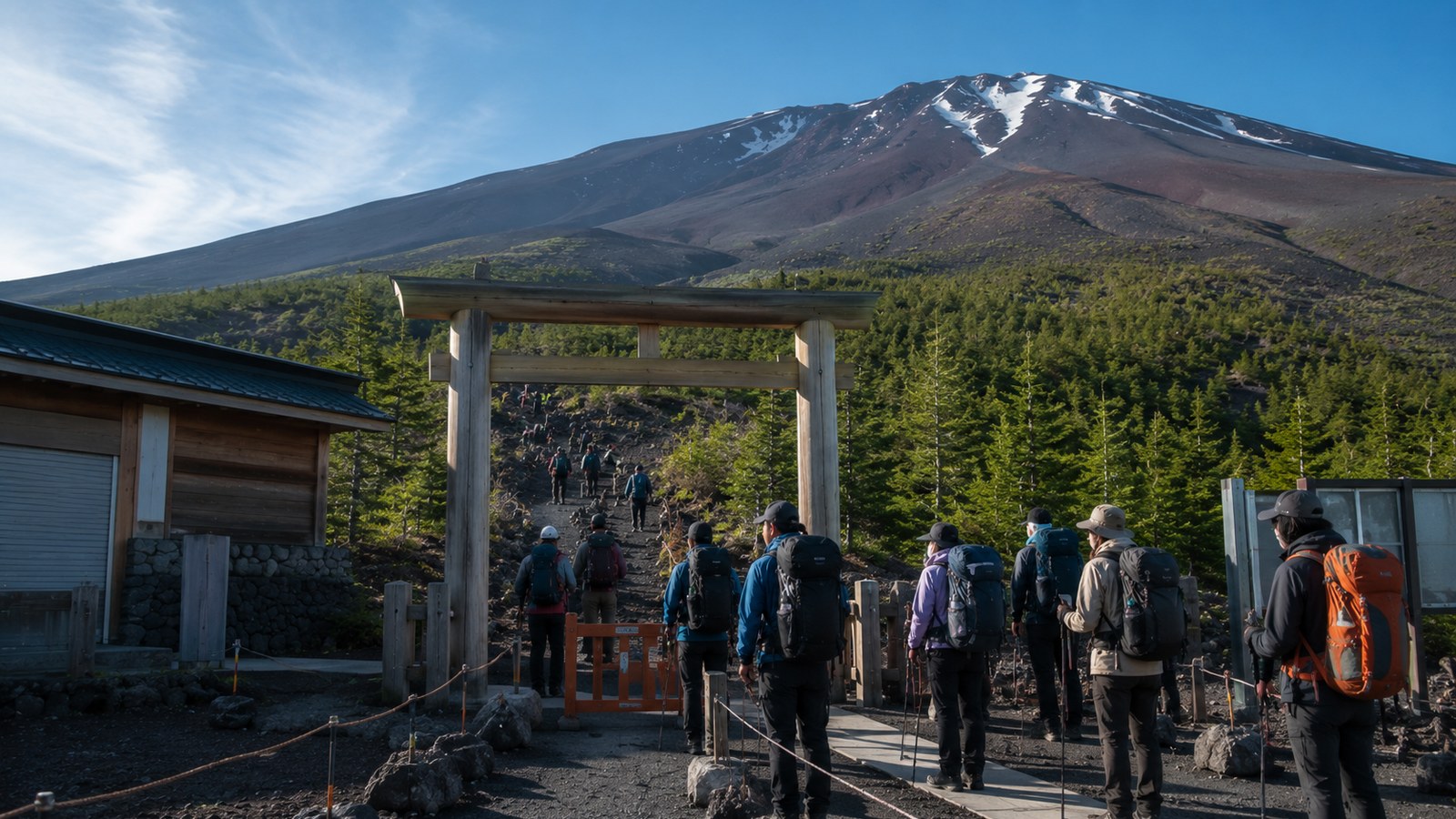
The Yoshida Trail is the most natural Mt. Fuji route for many Lake Kawaguchiko and Fujiyoshida visitors. It is also the route with rules that can surprise travelers who arrive late or without a clear plan.
For 2026, the Yamanashi notice explains gate-hour restrictions, a 4,000-person daily cap, and a 4,000 yen hiking fee for people passing through the gate and using the descending trail.
1. The gate can close
2 PM to 3 AM
This rule is designed to reduce unsafe late starts and so-called bullet climbing. For travelers, it means your start time is not just a preference; it is part of the route design.
How to avoid problems
- Do not arrive after lunch expecting to start freely.
- Book a hut if your plan requires an afternoon or evening start.
- Use the morning for trail entry and keep the previous night calm.
2. The daily limit matters
4,000 climbersPeak summer weekends, holidays, and sunrise windows can feel very different from quiet weekdays. Treat capacity as a real travel constraint, especially if you are coming from Tokyo on a fixed schedule.
Smart timing
- Avoid peak weekends when possible.
- Reserve passage if the system is available for your travel date.
- Keep alternatives such as 5th Station sightseeing, ropeway, or lakeside viewpoints.
3. What to carry
Safety basicsThe mountain begins above 2,300 meters at the 5th Station. Even in summer, the experience is colder, windier, and more exposed than central Kawaguchiko.
Minimum mindset
- Bring layers even when the lake area is hot.
- Use real hiking shoes, not city sneakers.
- Turn back early if timing, weather, or fatigue becomes uncomfortable.
Traveler translation
The short version: pay attention to gate time, capacity, payment, weather, and equipment. Mt. Fuji is iconic, but it is still a serious high-altitude mountain.
- Yoshida Trail
- Gate closure
- Daily limit
- Fuji safety


“The gate time made us stop treating Fuji like a late-day hike. We booked the hut, packed warmer layers, and left space for a slower descent.”