A sauna around Mt. Fuji is not just a way to warm up. Done well, it becomes the pause that makes the rest of the trip feel calmer: lake air after heat, a slow bath after a long walk, or a private evening at a villa instead of one more rushed restaurant booking.
Information checked: July 17, 2026. Facilities, opening hours, prices, entry rules, and sauna availability can change. Always confirm the official page before traveling, especially if your group needs tattoo guidance, late entry, towel rental, or private-use details.
Why Sauna Fits A Fuji Five Lakes Trip
Fuji Five Lakes travel has a habit of starting early and ending tired. Visitors chase morning visibility, move between lakes, walk more than expected, or come down from a mountain trail with legs that are no longer negotiating. A sauna helps when it is placed in the itinerary with space around it.
The local advantage is the air. At Yamanakako and around Mt. Fuji’s northern base, the cool-down is not just a cold room or a quick shower. It can be forest air, an open-air bath, a water bath, or a quiet drive back through the darkening foothills. That is why the best sauna plan here is usually simple: heat, wash, rest, hydrate, eat lightly, and avoid over-scheduling the evening.
Pick The Sauna Style That Fits Your Trip
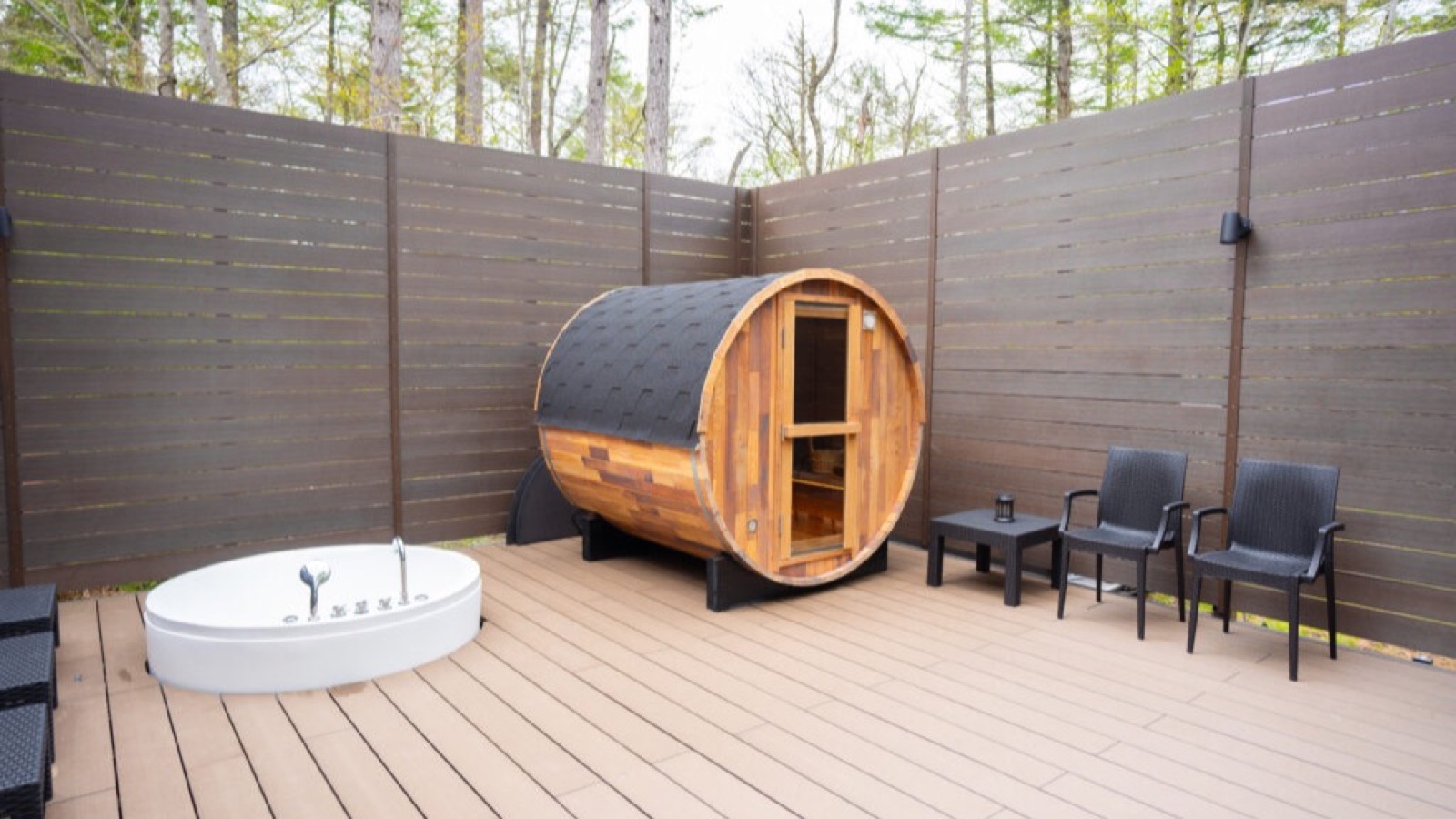
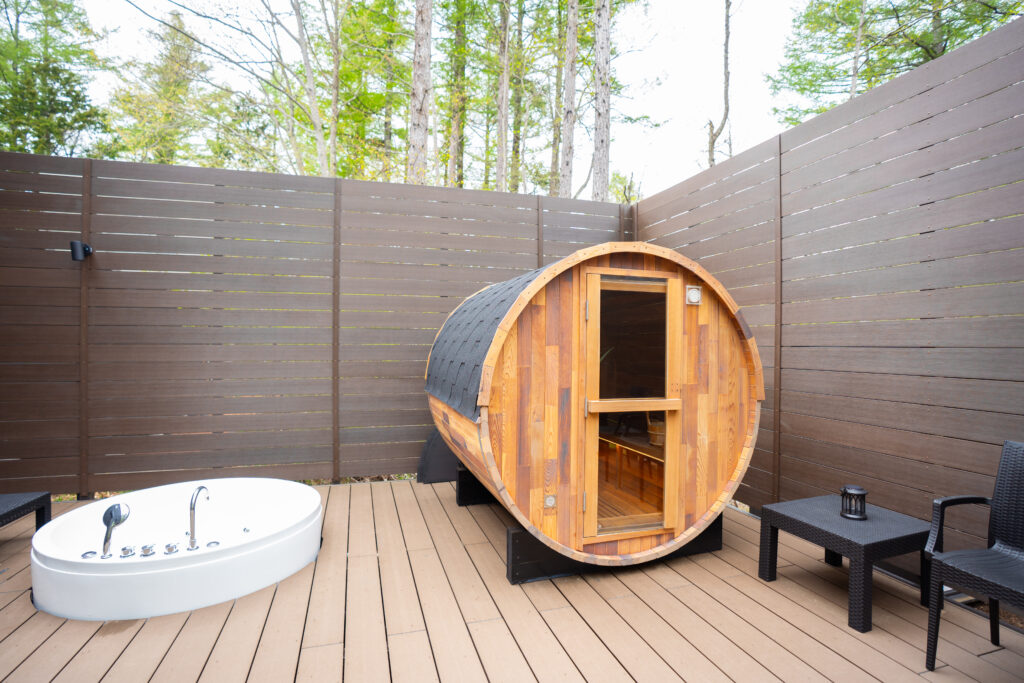
Kinfolk’s official site describes a terrace with a barrel sauna and Jacuzzi, plus BBQ, playroom, kitchen, and golf access. This is the choice when the group wants the sauna to belong to the stay, not to a public facility schedule.
Yamanakako Benifuji-no-Yu lists open-air baths with Mt. Fuji views and two sauna types: dry sauna and mist sauna. It is practical for Lake Yamanaka stays, but check current operating notices before building the night around it.
Fujiyama Onsen’s FUJIYAMA SAUNA page lists IKI stove saunas, an automatic steam cycle every 30 minutes, roughly 90 C for the men’s room, roughly 80 C for the women’s room, and a water bath around 16 C. It fits travelers staying near Fujiyoshida or Fuji-Q Highland.
Fuji Yurari presents itself as a day-use hot spring with 16 bath types. Its bath page lists a steam bath around 40 to 50 C, a sauna around 90 to 100 C, and a Fuji spring-water bath around 16 C.
Three Easy Sauna Routes
Spend the day around lake views, caves, museums, or a gentle food stop, then move to Narusawa before dinner. This works best by car because you can keep the evening loose and avoid watching the clock too closely.
When the day is already near Fujiyoshida, a public bath with a proper sauna setup is easier than detouring across the lakes. Keep a towel plan and confirm last entry before you commit.
This is the most relaxed version for families or friends. Shop before check-in, use the sauna safely before heavy drinking, keep dinner simple, and make the next morning about coffee, lake air, or a viewpoint rather than another long transfer.
The best Fuji sauna plan is not the hottest one. It is the one with enough margin to cool down properly, drink water, eat calmly, and sleep well before the next morning’s view.
What To Check Before You Go
- Hours and closing days: Onsen facilities can change hours seasonally or for maintenance. Do not rely on old maps or social posts.
- Tattoo policy: Public baths may refuse entry to guests with tattoos. Check each official site before arrival.
- Towels and payment: Some facilities require towel purchase or rental, and some operations are more cash-based than visitors expect.
- Alcohol: Avoid sauna and hot baths after drinking. Kinfolk asks guests not to use the sauna and Jacuzzi after alcohol, and public baths also restrict intoxicated guests.
- Post-climb condition: After Mt. Fuji, keep heat exposure gentle. If you are dehydrated, dizzy, injured, or unwell, prioritize rest and medical judgment over a sauna session.
Best Picks By Traveler Type
Families benefit from space, timing control, and a kitchen. A public bath can still be great, but only if everyone is comfortable with bath etiquette and the schedule is not too late.
Day-use onsen keeps the plan simple. Bring a small towel, check return transport, and avoid leaving the last transfer to chance.
A round, a sauna, and BBQ make more sense when nobody has to drive again after dinner. Assign the sauna before drinks, not after.
After a climb, your body may need food, water, and sleep more than heat. Use sauna carefully and stop early if anything feels off.