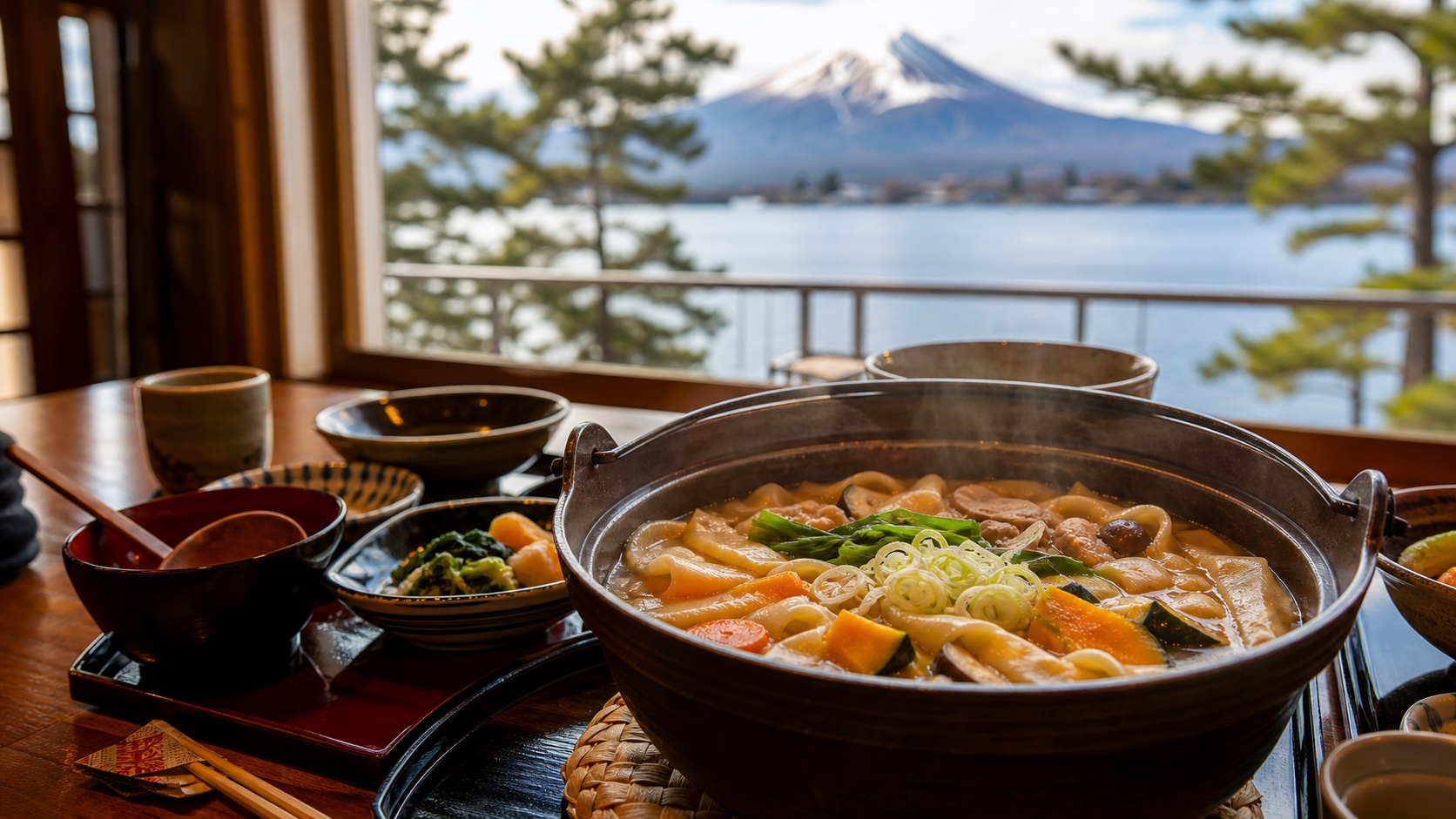
Lake Kawaguchiko Hoto Restaurants: Where to Try Yamanashi’s Comfort Noodles
Hoto, lakeside dinners, and a calm first meal around Mt. Fuji
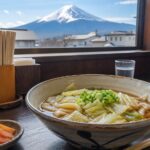
Hoto is one of the easiest local dishes for foreign visitors to understand: a generous iron pot, thick noodles, vegetables, miso-based broth, and a slow warmth that fits the Fuji Five Lakes climate.
Around Lake Kawaguchiko, it works especially well after a boat ride, museum visit, rainy afternoon, or winter view-chasing day. The best hoto meal is not rushed. It is the moment when the trip stops being logistical and starts feeling local.
Why hoto belongs near the lake
Kosaku, one of Yamanashi’s well-known hoto restaurant groups, describes hoto as a local Yamanashi specialty and explains its appeal through vegetables, pumpkin, thick noodles, dashi, miso, and individual iron-pot cooking.
For travelers, the dish solves a practical problem: it is filling, warm, and easy to share mentally even when each person orders their own pot. It also fits a slower lake itinerary better than a quick snack.
Hoto fits when
- The weather is cool, rainy, or windy.
- Your group wants a sit-down meal after sightseeing.
- You want a local dish without needing complex Japanese menu knowledge.
Use Kosaku as a reference point
Kosaku lists a Kawaguchiko branch in Funatsu and a Yamanakako branch, making it a useful reference when travelers are trying to understand where hoto fits in a Fuji Five Lakes route.
Its official menu highlights kabocha hoto as a basic, popular choice, alongside pork hoto, mushroom hoto, azuki hoto, and other branch-dependent items. The important lesson is not that every visitor must eat at one chain, but that hoto is a proper meal, not just a side stop.
How to choose a restaurant
- Prioritize location first: near your hotel, station, lake route, or evening return path.
- Check the current branch page for menu changes, closing days, and last order timing.
- Choose one main hoto meal per day rather than forcing it between several heavy stops.
Order with the whole day in mind
Hoto is comfortable, but it is also substantial. If you are planning an onsen, long bus ride, or late train afterward, keep the rest of the day light.
First-time visitors usually do best with a classic pumpkin hoto or a simple meat-and-vegetable version. More adventurous choices can be excellent, but the first bowl should teach the local style clearly.
Simple ordering habits
- Ask about portion size before adding too many side dishes.
- Let the broth cool before eating; the iron pot stays hot.
- Carry cash as a backup, especially at smaller local restaurants.
- Lake Kawaguchiko restaurants
- Hoto
- Yamanashi food
- Mt. Fuji dinner
Sources and Credits
Information checked on June 25, 2026 (JST).
Featured image generated for Lakeside Fuji Journal.
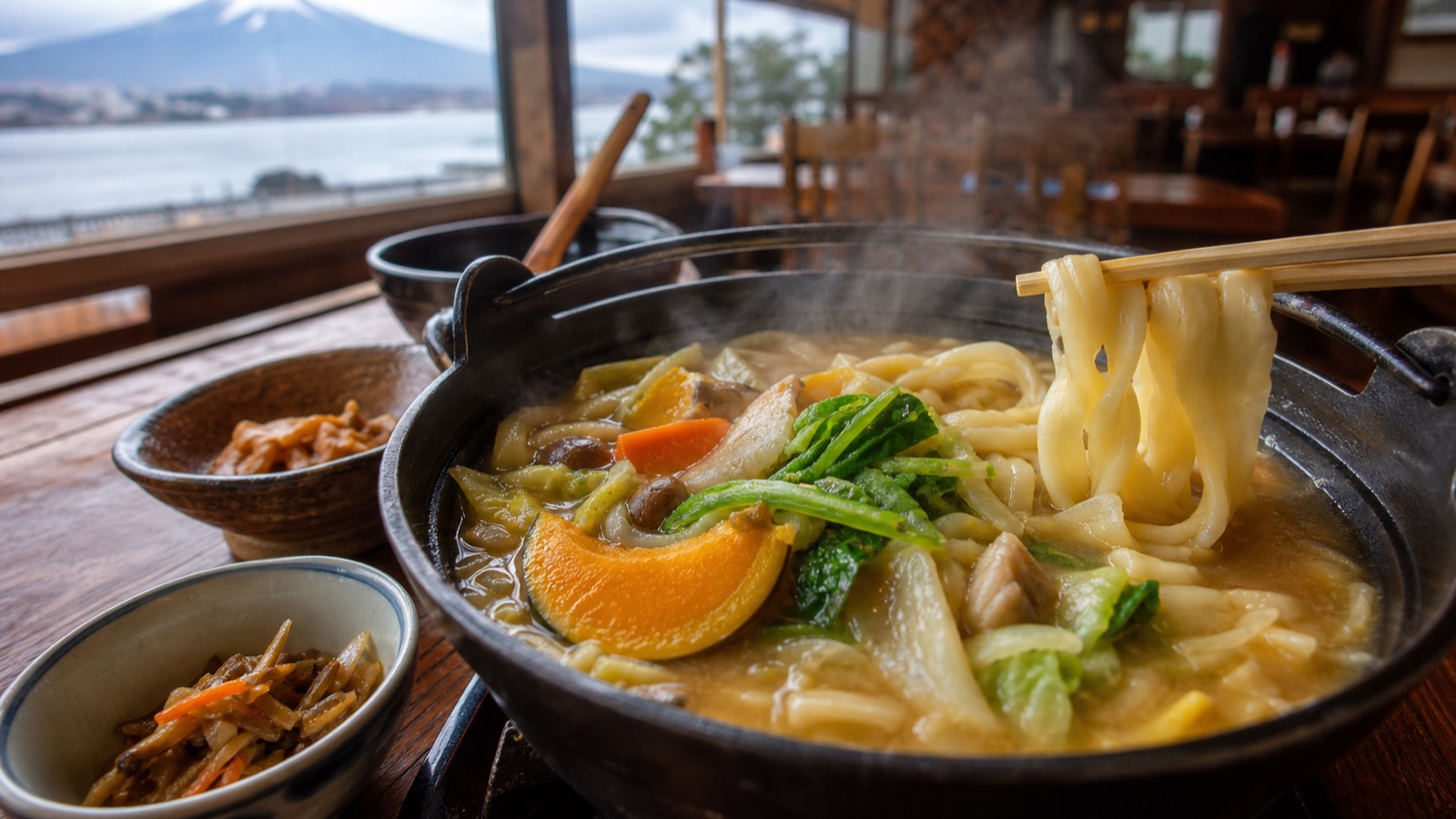
Use hoto after a lake walk, cloudy museum afternoon, winter viewpoint route, or late check-in. It is heavy enough to become the main meal, so do not force it between several other food stops.
| Traveler need | Best hoto choice | Why |
|---|---|---|
| First local meal | Classic pumpkin hoto | Shows the noodle, miso broth, and vegetable character clearly. |
| Cold or rainy day | Simple vegetable or meat hoto | Warm, filling, and easy for a group to understand. |
| Tight schedule | Nearest good route-fit restaurant | Location often matters more than ranking around the lake. |
Order carefully
The iron pot stays hot. Let the broth cool, and avoid over-ordering sides before you see the portion.
Plan around it
Make hoto the anchor meal, then keep the next cafe or snack light.
What are hoto noodles?
Hoto is a Yamanashi regional dish with thick flat noodles, vegetables such as pumpkin, and a miso-based broth, usually served hot in a substantial pot.
Where should I eat hoto in Kawaguchiko?
Choose by route first: near your hotel, station, lake walk, museum, or evening return path. A famous restaurant that breaks the day is not always the best travel choice.
Is hoto good for dinner after Mt. Fuji sightseeing?
Yes. Hoto works especially well after a cool, rainy, or tiring Fuji day because it is warm, filling, and easy for first-time visitors to understand.