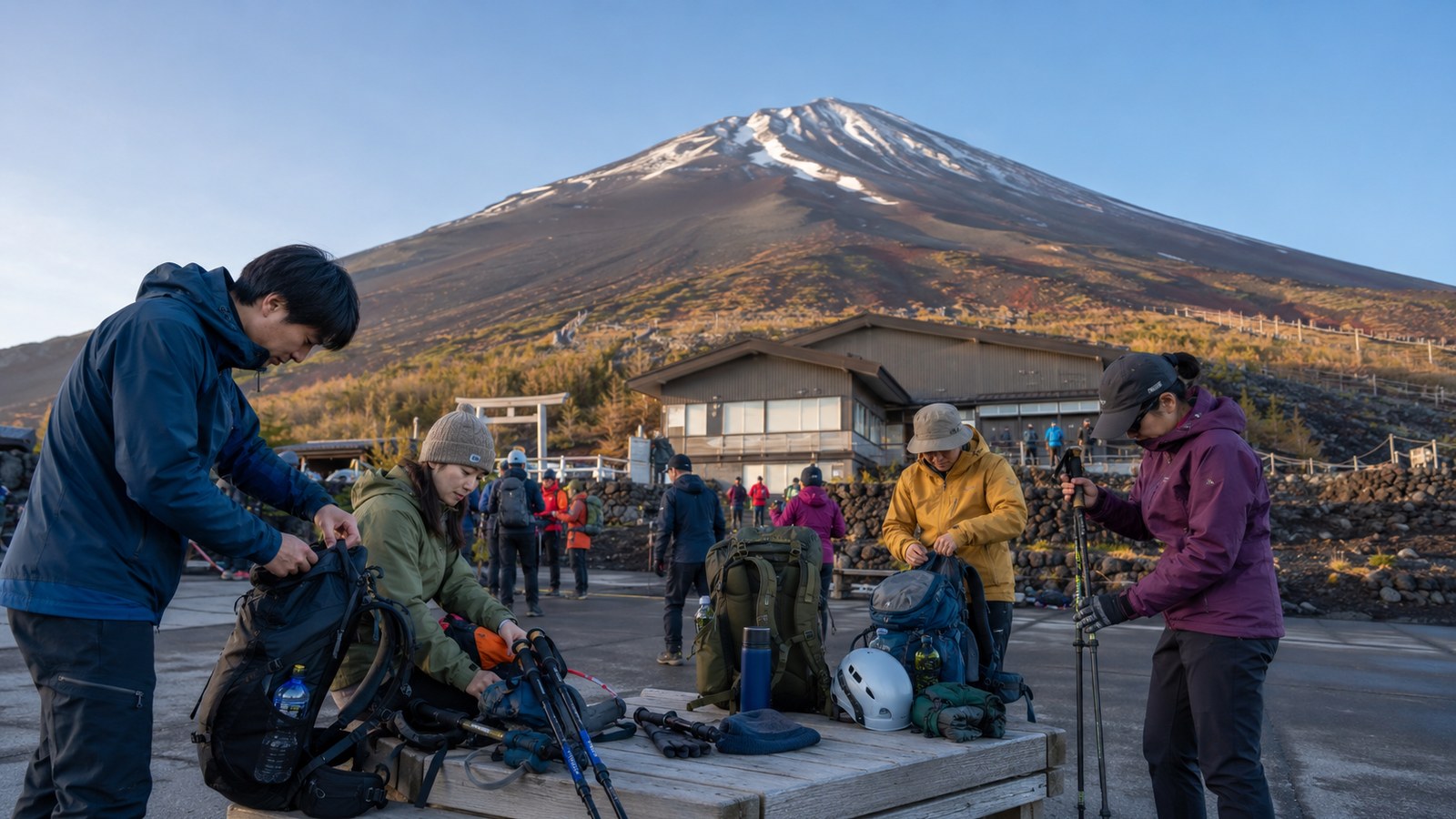
Mt. Fuji Climbing Season 2026: What Lake Kawaguchiko Visitors Should Know
A practical guide for international travelers staying near Lake Kawaguchiko
For many international travelers, Lake Kawaguchiko is the natural base for seeing Mt. Fuji: it has hotels, bus access, hot springs, lake views, and relatively easy connections toward the Yoshida Trail area.
In 2026, visitors should plan with a little more care. Trail opening dates, hiking fees, mountain-hut reservations, and transport restrictions can affect even travelers who only want to visit the 5th Station or photograph the mountain from the lakeside.
1. 2026 Opening Schedule
Current season note
Opening dates may change depending on late snow removal and mountain conditions, so travelers should check the official Mt. Fuji Climbing website before building a fixed itinerary.
What to plan around
- Early July: Yoshida Trail access becomes the main focus for Kawaguchiko-based travelers.
- Mid-July to August: expect heavier demand for mountain huts, buses, and sunrise itineraries.
- Outside the season: treat the mountain as a viewing destination, not a casual hike.
Best planning window
Book huts, buses, and rest days before arriving in Kawaguchiko.
2. Fees, Registration, and Hut Planning
Climber essentialsFor international visitors, the safest approach is to register and pay in advance when possible, then keep the confirmation available on your phone and offline.
Before you climb
- Do not rely on a same-day sunrise plan: mountain huts often fill during peak dates.
- Carry cash: cards and mobile payments are not guaranteed on the mountain.
- Pack for cold and rain: summer at the lake does not mean summer on the summit.
Traveler rhythm
Spend one quiet night near the lake before and after the climb.
3. Staying at Lake Kawaguchiko
Base strategyA refined trip does not need to rush straight from Tokyo to the trail. Use the lake as a soft landing, check the weather, and keep one flexible day for clouds or fatigue.
How to make it easier
- Arrive before evening: confirm your bus route and buy any last-minute supplies.
- Leave luggage at your hotel: climb light and return to a familiar place.
- Plan a recovery day: hot springs, easy food, and a lakeside walk make the climb feel complete.
Best fit
Two nights minimum around Kawaguchiko for a calmer climb.
Responsible travel note
Mt. Fuji is a sacred mountain and a fragile World Heritage landscape. Stay on marked routes, follow official restrictions, pack out trash, and avoid attempting a summit hike when weather, fatigue, or timing are not on your side.
- 2026 climbing season
- Yoshida Trail
- Lake Kawaguchiko base
- Mt. Fuji safety
Official information and photo credits
- Official information: Official Website for Mt. Fuji Climbing
- Official information: JNTO Mt. Fuji Climbing Guide
- Photo: Fabio Achilli / Wikimedia Commons / CC BY 2.0